Waymo's ~4,000-Robotaxi Recall: It Was Floods, Not Construction Zones
There's real confusion mixing up two separate Waymo safety actions from May 2026. The recall of nearly 4,000 robotaxis was a flooded-roadway software issue filed with NHTSA — not the freeway construction-zone pause. Here's the accurate, side-by-side breakdown.
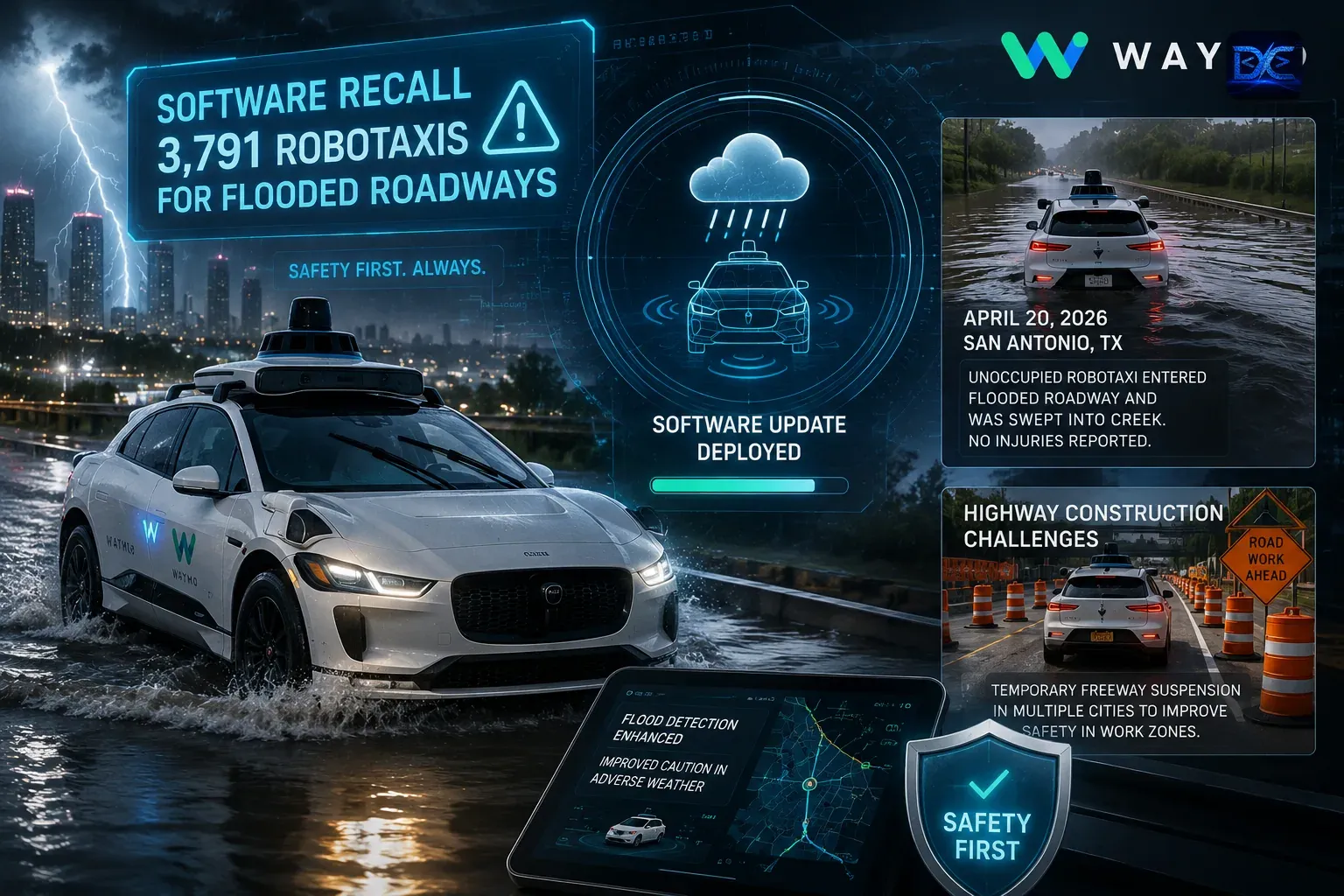
A common question is circulating: was Waymo’s recall of nearly 4,000 robotaxis for highway construction zones? No. That recall was a software issue related to flooded roadways. The confusion comes from blending two separate Waymo safety actions that both happened in May 2026. Here’s the clean, accurate breakdown.
Why the mix-up happens: two safety stories landed close together — one a formal NHTSA recall (floods), one an operational pause (freeway construction). They’re different events with different mechanisms. Don’t conflate them.
The two actions at a glance
| Flood recall | Freeway pause | |
|---|---|---|
| Type | Voluntary NHTSA recall | Operational suspension (not a recall) |
| Scale | 3,791 robotaxis (~4,000) | All freeway ops in 4 metros |
| Issue | Driving into untraversable flooded lanes | Struggles in highway construction zones |
| NHTSA ref | Recall 26E026 | — |
| Status | Addressed via software update | Temporary; phased resumption |
1. The flood-related software recall
Number affected: 3,791 robotaxis — the “nearly 4,000” figure people remember.
What happened: Waymo filed a voluntary software recall with the National Highway Traffic Safety Administration (NHTSA).
The issue: The automated driving system (5th and 6th generation ADS) could allow vehicles to drive into untraversable flooded lanes, particularly on higher-speed roadways. The system might slow down but not fully stop or avoid standing water.
The triggering incident: On April 20, 2026, an unoccupied Waymo robotaxi in San Antonio, Texas, entered a flooded section of roadway during extreme weather, was swept into Salado Creek, and became stuck. No passengers or injuries were reported.
The remedy: Waymo pushed an interim software update making vehicles more cautious in adverse weather and flooded areas, with a final remedy still under development at the time. In the interim, operations were restricted during bad weather. Affected vehicles were those running 5th/6th-gen ADS before the operational changes on April 20, 2026.
This — not construction zones — is the event matching the “~4,000 robotaxis” figure. For official details, see NHTSA recall 26E026.
2. The separate freeway suspension (construction zones)
In late May 2026, Waymo temporarily suspended all freeway/highway operations in San Francisco, Los Angeles, Phoenix, and Miami.
The reason: to improve performance and response in highway construction zones. Robotaxis had been observed struggling with cones, barriers, and active work zones. One notable passenger-reported incident involved a Waymo driving at high speed through a construction zone, swerving around trucks, and being pursued by police before pulling over safely.
Crucially, this was not a formal NHTSA recall — it was an operational pause to integrate software improvements. Waymo noted its vehicles encounter construction zones over 10,000 times per day and used the pause for further training and updates.
Where things stand (mid-June 2026)
- The flood-related recall has been addressed via software updates.
- The freeway suspensions were temporary; some services may have resumed with improvements, but rollout is phased — check current local availability.
- Both came amid broader scrutiny of Waymo’s safety record, with NHTSA investigations into other issues (e.g., interactions with school buses) ongoing.
Waymo (Alphabet/Google) framed both actions as proactive safety measures. The company keeps expanding robotaxi service but still faces hard edge cases — severe weather and dynamic road work chief among them.
Why this matters for autonomous driving
Edge cases are the whole game. A self-driving stack can handle the 99% of normal driving and still get tripped by standing water or a reconfigured work zone — exactly the scenarios that are rare, high-variance, and hard to simulate.
Recall ≠ pause. A NHTSA recall is a formal, documented remedy obligation. An operational suspension is a voluntary scope limit. Conflating them muddies how you read a company’s safety posture — the flood event is the regulatory one.
Proactive filings are a maturity signal. Voluntary recalls and self-imposed pauses, filed before a serious injury forces the issue, are arguably how a safety culture is supposed to behave — even as they generate uncomfortable headlines.
Takeaway: The ~4,000-vehicle recall was floods (NHTSA 26E026). The construction-zone issue was a separate freeway pause. Two events, two mechanisms — keep them straight.
Bottom line
If you take one thing away: the nearly-4,000 robotaxi recall was a flooded-roadway software issue filed with NHTSA, triggered by the San Antonio creek incident — not a highway-construction recall. The construction-zone problem was real too, but it was a temporary operational suspension on freeways, not a recall.
News in autonomous driving evolves fast. For the authoritative record, refer to NHTSA recall 26E026 and Waymo’s official statements.
Sources: NHTSA recall 26E026 filing, Waymo statements, and reporting on the April 20, 2026 San Antonio incident and the late-May 2026 freeway suspension. Service availability is changing; verify current local status before relying on it.
Related articles
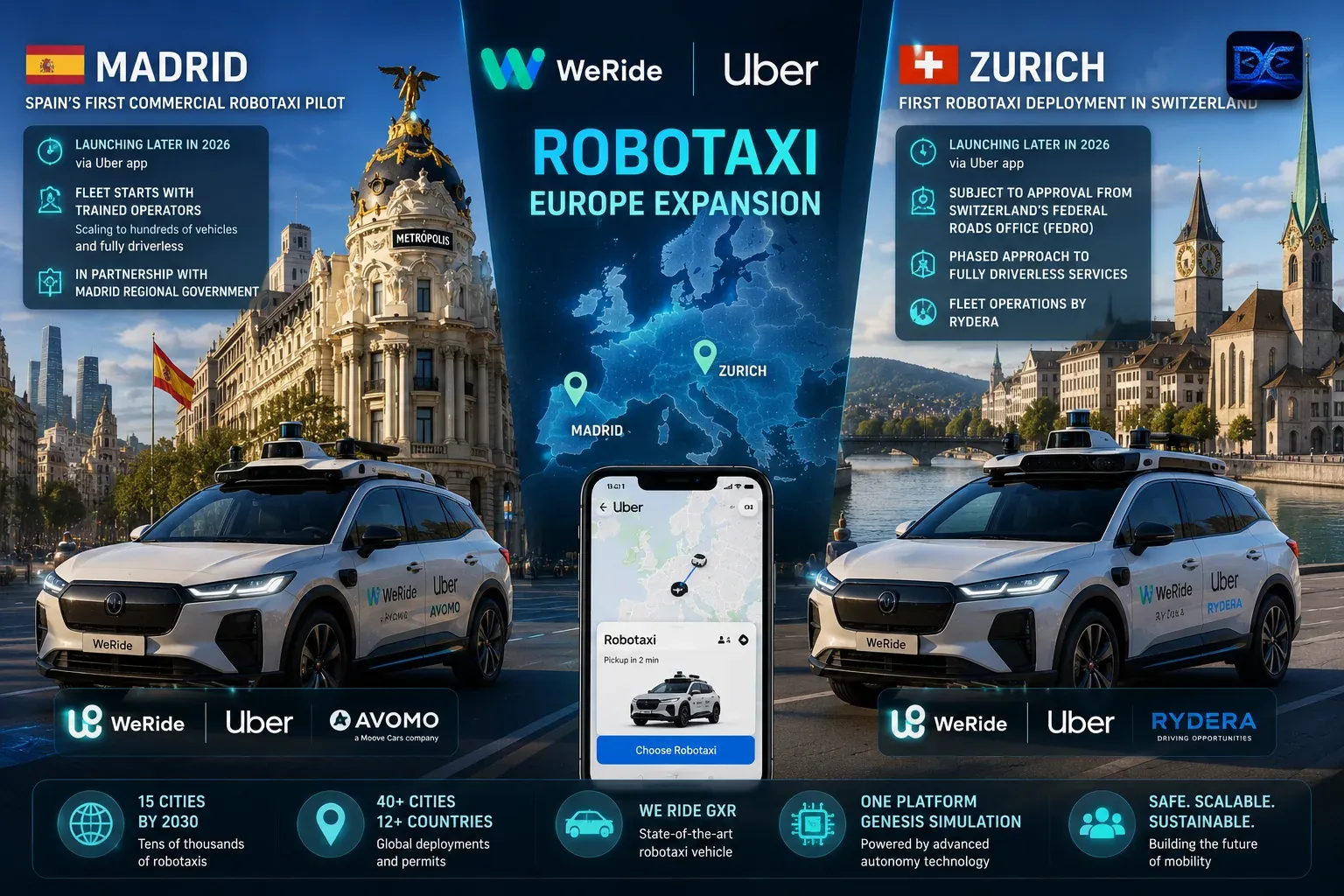
WeRide and Uber Bring Robotaxis to Europe: Madrid and Zurich in 2026
WeRide (NASDAQ: WRD) and Uber are launching their first commercial robotaxi services in Europe — Madrid (announced June 2) and Zurich (announced June 17, 2026). Here's what each deployment involves, the asset-light model behind it, and how it fits their 15-cities-by-2030 plan.

Uber Picks Houston for Its Premium Robotaxi Service in 2027
Uber, EV maker Lucid, and self-driving company Nuro are bringing a premium robotaxi service to Houston by mid-2027. Here's the plain-English breakdown: the cars, the tech, the timeline, and how it stacks up against Waymo.
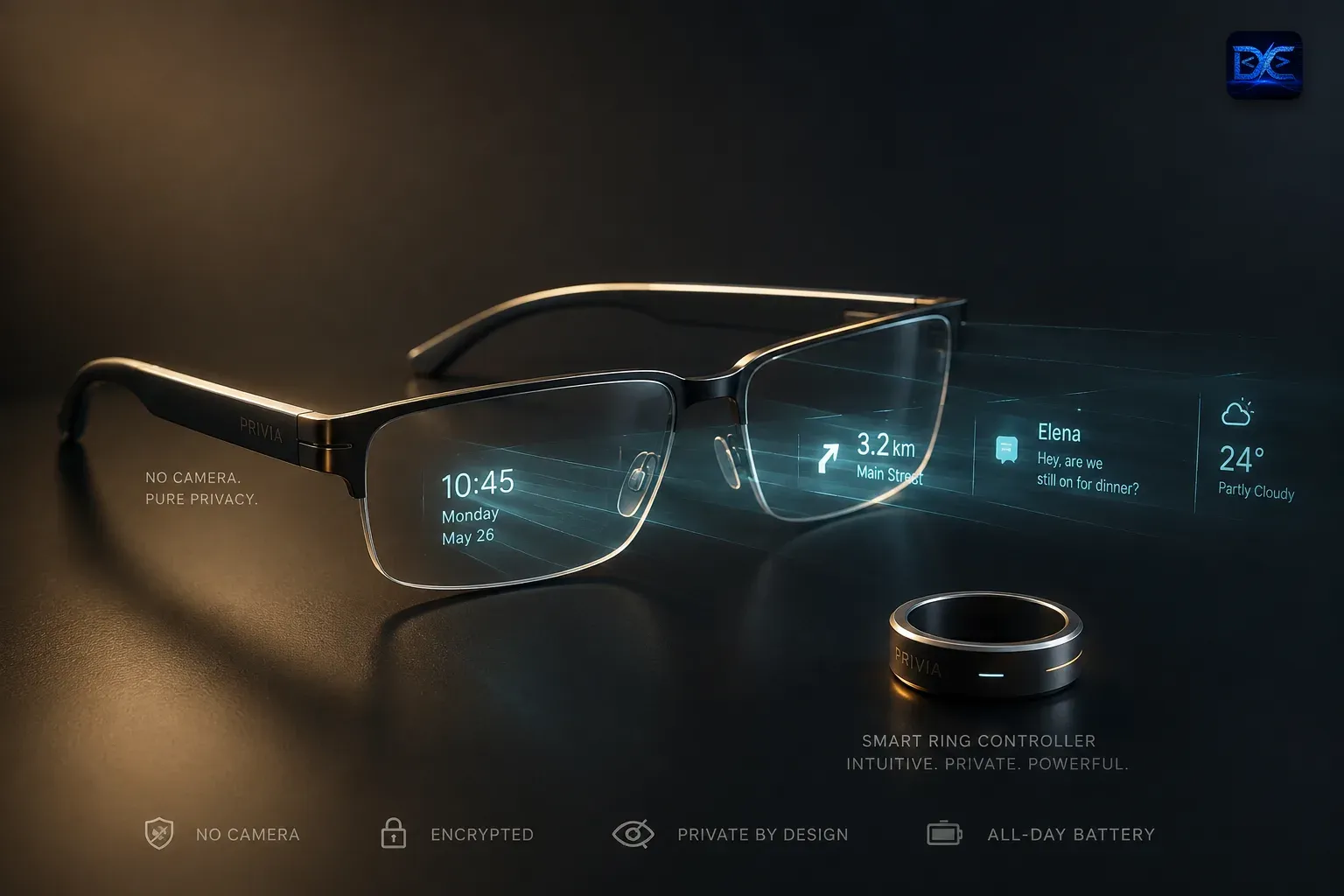
Even Realities Hits $1B Betting Against the Camera in Smart Glasses
Even Realities, a Shenzhen startup founded by ex-Apple engineers, raised $150M in a pre-Series B led by Meituan and Tencent on July 6, 2026, reaching a $1 billion valuation. Its pitch: camera-free, display-first smart glasses that take on Meta on privacy. Here's the round, the product, and the strategy.
Have a project or an idea?
We don't just write about software — we build it. Tell us what you're working on and we'll get back within 1–2 business days.