Micron Crushes It: Record $41.5B Quarter Reignites the AI Chip Trade
Micron reported blockbuster fiscal Q3 2026 results on June 24, 2026 — record revenue of $41.46 billion (up ~346% YoY) and $25.11 non-GAAP EPS, both crushing estimates — then guided to a stunning ~$50 billion next quarter. Shares jumped ~15%, SK Hynix and Samsung rallied, and the whole HBM/AI memory trade got its confidence back. Here's the breakdown.

The AI memory boom just got its loudest endorsement yet. After the bell on June 24, 2026, Micron (Nasdaq: MU) reported record fiscal Q3 2026 revenue of $41.46 billion — up roughly 346% year over year and about 16% above Wall Street’s ~$35.7B estimate — with non-GAAP EPS of $25.11 versus the ~$20.3 expected. Then it did the thing that really moved the tape: it guided next quarter to ~$50 billion in revenue. Shares jumped ~15% in after-hours trading, and the rest of the memory complex went with it.
Fast-moving story. Revenue, EPS, guidance and stock moves below are point-in-time around June 24–25, 2026 and markets move fast. Treat every figure as a snapshot — check a live financial platform (tickers MU, plus SK Hynix and Samsung in Seoul) before relying on it.
At a glance
| Detail | |
|---|---|
| Reported | After close, June 24, 2026 (fiscal Q3 2026) |
| Revenue | $41.46B — record, up ~346% YoY (from $9.30B) |
| Non-GAAP EPS | $25.11 vs ~$20.3 est (GAAP $24.67) |
| GAAP net income | $28.24B (vs $1.89B a year earlier) |
| Gross margin | ~85% (from ~38% YoY) |
| Q4 FY26 guidance | $50.0B ± $1.0B revenue; EPS $31.00 ± $1.00 |
| Stock reaction | ~+15% after-hours; SK Hynix +12–13%, Samsung +5.4% |
What happened
Micron didn’t just beat — it blew the doors off. Revenue of $41.46 billion set a company record and landed roughly 16% above consensus, while non-GAAP EPS of $25.11 topped estimates by about 24%. GAAP net income hit $28.24 billion, up from a slim $1.89 billion a year ago, as gross margin expanded to roughly 85% from about 38% — a swing that says everything about the pricing power memory makers suddenly hold.
CEO Sanjay Mehrotra framed it directly: the results “reflect the strategic value of memory in the AI era.” It was Micron’s seventh straight EPS beat, and the ~$50 billion Q4 guide — with non-GAAP EPS pegged near $31 — implies the run is accelerating, not cooling.
The engine: HBM, sold out
The driver is high-bandwidth memory (HBM) — the stacked DRAM that sits next to AI accelerators and feeds them data fast enough to keep the GPUs busy. Demand is so far ahead of supply that Micron says it can only fill half to two-thirds of what customers want, and its entire 2026 HBM output is already sold out under multi-year contracts.
A few numbers that capture how locked-in the demand is:
- Data-center revenue of roughly $25 billion in the quarter alone.
- HBM4 ramping about 2x faster than the prior HBM3E generation, with HBM4 revenue already topping $1 billion; orders booked through calendar 2027 and demand visible into 2028.
- Around $22 billion in customer cash deposits collected up front — buyers pre-paying to lock in supply.
- Strategic customer agreements totaling on the order of $100 billion in minimum contracted revenue.
That last set of figures is the real tell. When customers wire billions in deposits to guarantee allocation, the “is AI demand real?” debate stops being abstract.
The market reaction: the memory trade rallies
MU surged about 15% after hours, recovering far more than it had lost in the prior week’s selloff. The read-through hit Micron’s peers fast:
- SK Hynix jumped ~12–13% to a record high in Seoul.
- Samsung Electronics rose about 5.4%, and Japan’s Kioxia climbed ~12%.
- Analysts piled on — JPMorgan and Goldman Sachs both lifted price targets sharply.
The timing mattered. Micron reported into a jittery tape: the Nasdaq had shed more than $1 trillion in the prior two sessions on fears the AI spending cycle was peaking (see our coverage of the tech selloff and the rebound). The print landed like a counter-argument — at least for memory.
Takeaway: One quarter doesn’t settle the AI-bubble debate, but it does hand the bulls hard evidence. Micron’s $28B quarterly profit and a sold-out HBM book are exactly the kind of cash-flow proof the skeptics had been demanding.
Why it matters
1. Memory is the cleanest read on AI demand. Unlike a hyperscaler’s capex pledge — a promise to spend — Micron’s deposits and multi-year HBM contracts are demand that’s already booked and paid for. That makes its print one of the most concrete signals in the whole AI trade.
2. The pricing power is structural, not seasonal. Gross margin going from ~38% to ~85% in a year reflects a supply-constrained market where AI buyers outbid everyone for DRAM and NAND. That same dynamic is why Apple just raised prices on Macs and iPads — the memory squeeze flows downstream to consumers.
3. It steadied a shaky sector. After a week of AI-bubble anxiety, a blowout from the purest memory play helped reset sentiment across chips. Concentration cuts both ways: the same names that led the rout led the bounce.
Bottom line
Micron delivered a record $41.46 billion quarter, a ~$50 billion guide, and a sold-out HBM order book stretching into 2027 — then watched its stock pop ~15% and drag the entire memory complex higher. The bear case (that AI memory demand could soften before new capacity lands) isn’t dead, but this print pushes it out on the horizon.
For now, the AI memory thesis has its receipts. For the live picture, check MU and the Seoul-listed memory names before trading on any figure here.
Sources: Micron’s fiscal Q3 2026 press release (June 24, 2026) and earnings call, plus reporting from Reuters, CNBC, Yahoo Finance, Investing.com, TradingView and 24/7 Wall St. Earnings figures, guidance and stock moves are point-in-time and volatile; verify current quotes and the official filing before relying on them.
Related articles
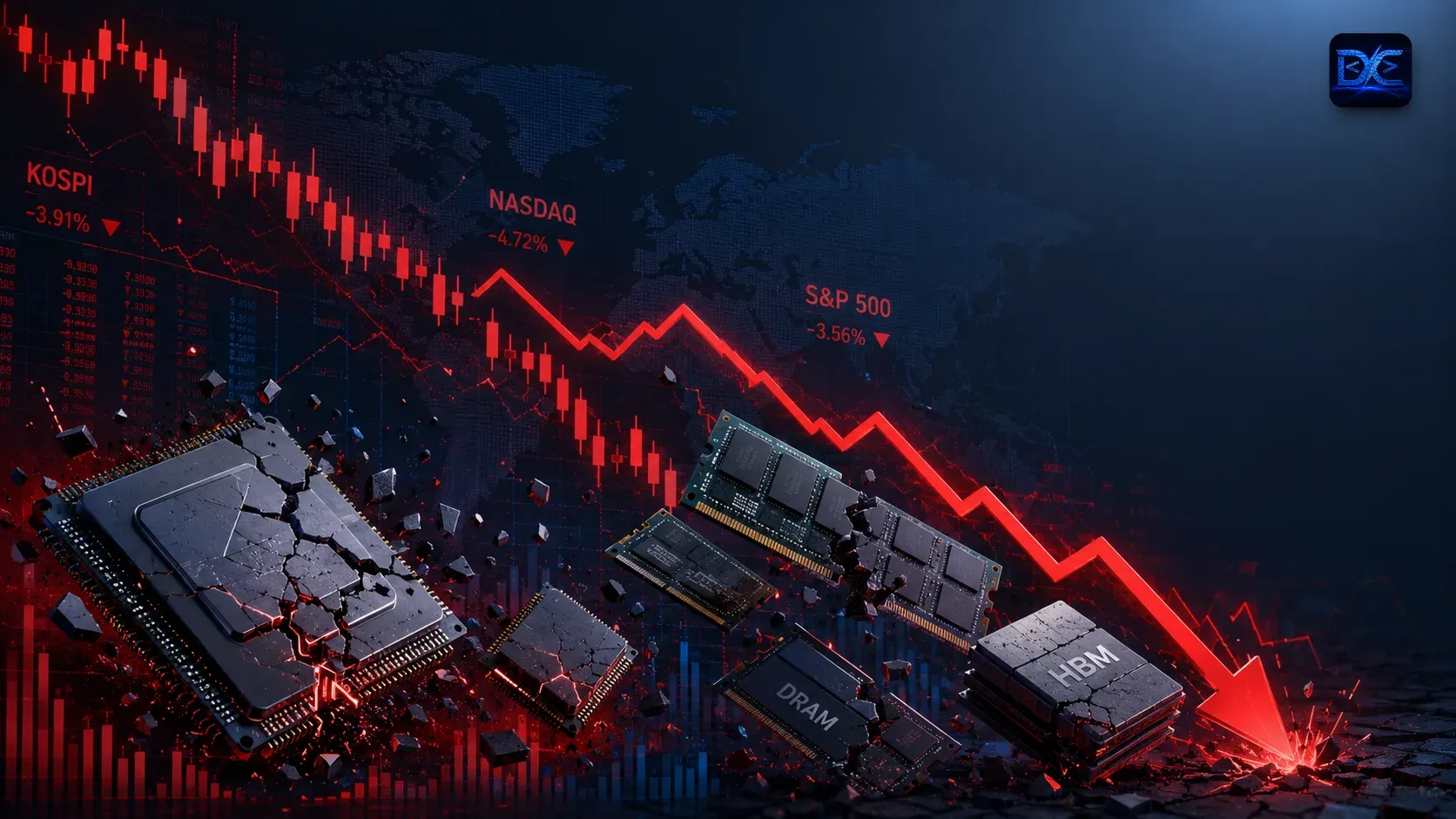
Global Tech Selloff Deepens: Chip and AI Stocks Lead a Worldwide Rout
A broad tech rout swept global markets on June 23, 2026. South Korea's Kospi crashed ~10% on Samsung and SK Hynix, triggering a trading halt, before the selling hit Europe and the US — where memory and AI-chip names led the Nasdaq and S&P 500 lower. Here's what moved, why, and what to watch.

AI-Rally Jitters: Tech Stocks Tumble as Micron Earnings Become the Big Test
Tech stocks slid hard around June 24, 2026, with the Nasdaq 100 on track to shed over $1 trillion as Nvidia, AMD and Tesla led the selling. Investors treated Micron's Q3 report — due June 24 — as a pulse check on whether the AI memory boom can keep justifying record valuations. Here's what moved and why.
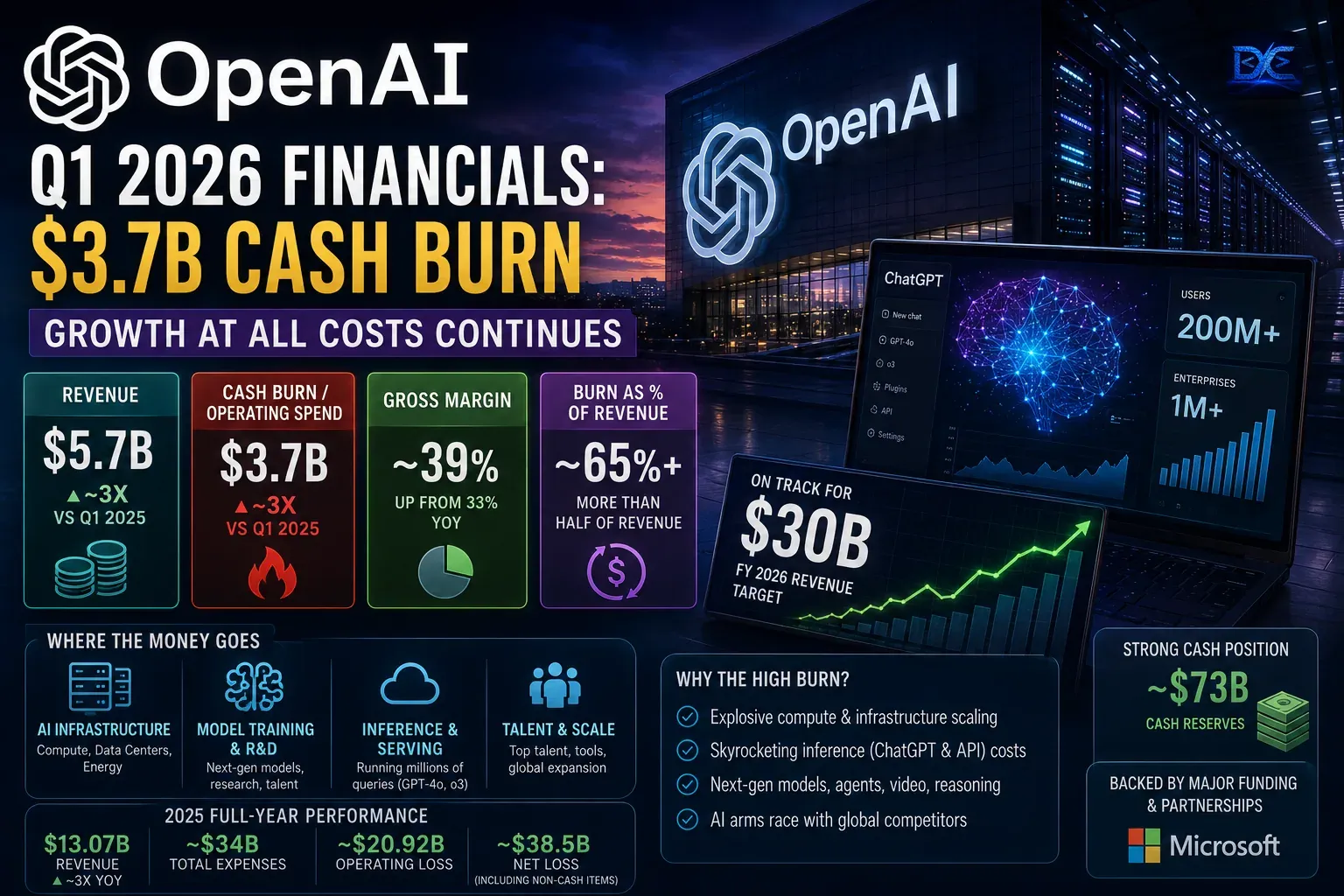
OpenAI's Q1 2026: $5.7B Revenue, $3.7B Burn — Growth at All Costs
OpenAI's first quarter of 2026 shows revenue and cash burn both roughly tripling year over year. Here's a clear, no-jargon look at the numbers, where the money goes, why the burn is so high, and what it means for the road to profitability.
Have a project or an idea?
We don't just write about software — we build it. Tell us what you're working on and we'll get back within 1–2 business days.