Amazon's Zoox Upgrades Its Robotaxi Ahead of Commercial Expansion
On June 24, 2026, Amazon-owned Zoox revealed comfort and design upgrades to its purpose-built, steering-wheel-free robotaxi — redesigned seats, relocated reflectors and two-way audio — ahead of a commercial launch later this year. Its Hayward plant can build up to 100 vehicles a week, scaling toward 10,000 a year, with paid rides pending NHTSA approval.
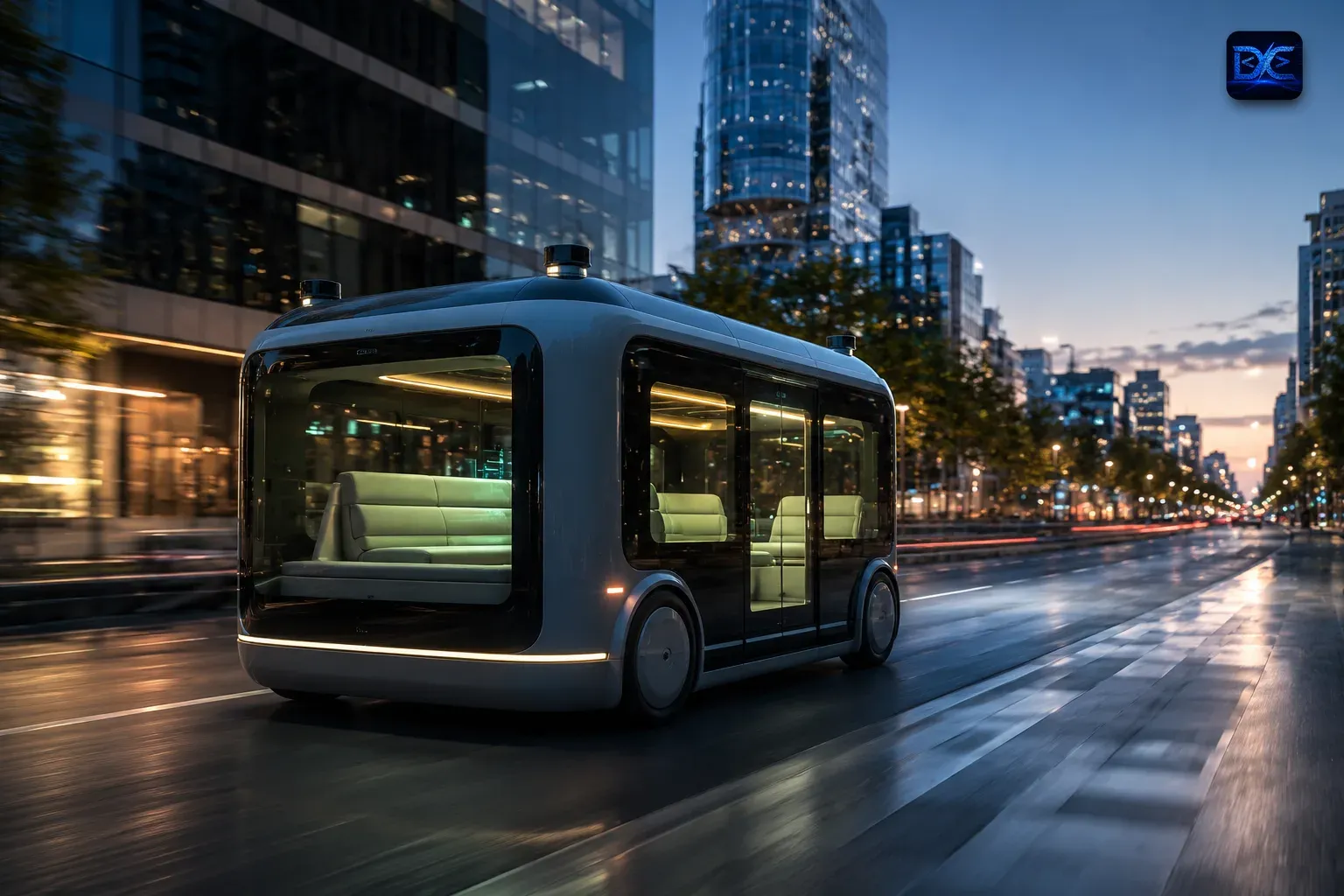
Amazon’s self-driving unit is polishing the product before it charges for it. On June 24, 2026, Zoox revealed a round of comfort and design upgrades to its electric, purpose-built, steering-wheel-free robotaxi — refinements drawn from rider feedback and timed for what it hopes will be a commercial launch later this year. The changes land as Zoox ramps production and lines up an expansion across multiple US cities.
Fast-moving story. Rollout timing, city plans and production figures below reflect Zoox statements around June 24, 2026, and depend on regulatory approvals. Treat them as point-in-time and check Zoox’s latest updates before relying on specifics.
At a glance
| Detail | |
|---|---|
| What | Redesigned interior + exterior of the purpose-built robotaxi |
| Why now | Rider feedback, ahead of commercial (paid) launch later in 2026 |
| Production | Up to 100 vehicles/week at Hayward, CA; goal ~10,000/year |
| Testing cities | Free rides in Austin, San Francisco, Las Vegas, Miami |
| Expansion | Broader San Francisco footprint; Austin & Miami growth in 2026 |
| Gating factor | NHTSA exemption for steering-wheel-free commercial operation |
What changed
The upgrades focus on comfort, clarity and communication:
- Interior: more padded, ergonomically curved seats and headrests; a lighter palette of aloe-green seating with stone-grey flooring and trim; fluting on the charging pad to keep phones from sliding; bigger cupholders; and a more visible touchscreen display.
- Exterior: relocated bidirectional reflectors so riders and others can more easily tell the vehicle’s front from its rear, plus a new speaker and microphone at the door enabling two-way audio for rider communication and emergency-response coordination.
Crucially, the refresh was engineered in preparation for volume production — these aren’t one-off concept tweaks but changes meant to scale on the line.
As Chris Stoffel, Zoox’s director of robot industrial design, put it: “The updates we’ve made to this iteration of our purpose-built robotaxi continue to further distinguish the Zoox experience from anything else available today.”
Building for scale
Zoox’s Hayward, California facility can already produce up to 100 vehicles a week, with an ultimate target of roughly 10,000 robotaxis per year. That capacity is the backbone of the commercial plan: you can’t run a paid, multi-city service without a fleet to put on the road.
Today the company offers free rides in Austin, San Francisco, Las Vegas and Miami, and has been quadrupling its San Francisco service area across the eastern half of the city — neighborhoods like the Marina, North Beach, Chinatown, Pacific Heights and the Embarcadero corridor — with further growth in Austin and Miami planned through 2026.
The regulatory gate
The big unknown isn’t the hardware — it’s approval. Because Zoox’s vehicle has no steering wheel or pedals, commercial operation hinges on an exemption from the National Highway Traffic Safety Administration (NHTSA). The company has closed its public-comment window and now awaits a decision that would let it switch on paid rides.
Why it matters
1. From pilot to product. Refining seats, audio and visibility is the unglamorous work that separates a tech demo from a service people pay to ride. It signals Zoox thinks it’s close.
2. Manufacturing is the moat. A purpose-built vehicle produced at up to 100/week gives Zoox a different scaling path than rivals retrofitting existing cars — but it only pays off with regulatory clearance and multi-city demand.
3. The robotaxi race is crowding. With paid rides gated on NHTSA, the approval timeline — not the vehicle — may decide how fast Zoox can compete as the autonomous-ride market heats up.
Bottom line
Zoox’s update is a tell that Amazon’s robotaxi unit is shifting from testing to commercialization: a more comfortable, clearer, better-communicating vehicle, built on a line that can already manage 100 a week and aims for 10,000 a year. Free rides are live in four cities, expansion is mapped — and the one thing standing between Zoox and paying passengers is an NHTSA green light.
Sources: Zoox announcement and coverage from June 24, 2026, including TechCrunch, CNBC and The Robot Report. Rollout timing and approvals are point-in-time and subject to regulatory decisions; verify the latest before relying on specifics.
Related articles

China Reclaims the Supercomputer Crown: All-Domestic 'LineShine' Tops the TOP500
China's LineShine system in Shenzhen hit 2.198 Exaflops to top the June 2026 TOP500 — its first number-one since 2017 — built entirely on domestic CPUs, interconnect, and OS. It beats the US El Capitan, but a CPU-only design means it may not lead in AI workloads. Here's the breakdown.

Intel Jumps ~9% on Apple Chip Partnership: What's Behind the Surge
Intel shares spiked nearly 9% in pre-market on June 18, 2026 after President Trump said Apple has agreed to partner with Intel to design and make chips in the U.S. Here's what the deal reportedly involves, why it's a big deal for Intel's foundry turnaround, and the caveats worth keeping in mind.
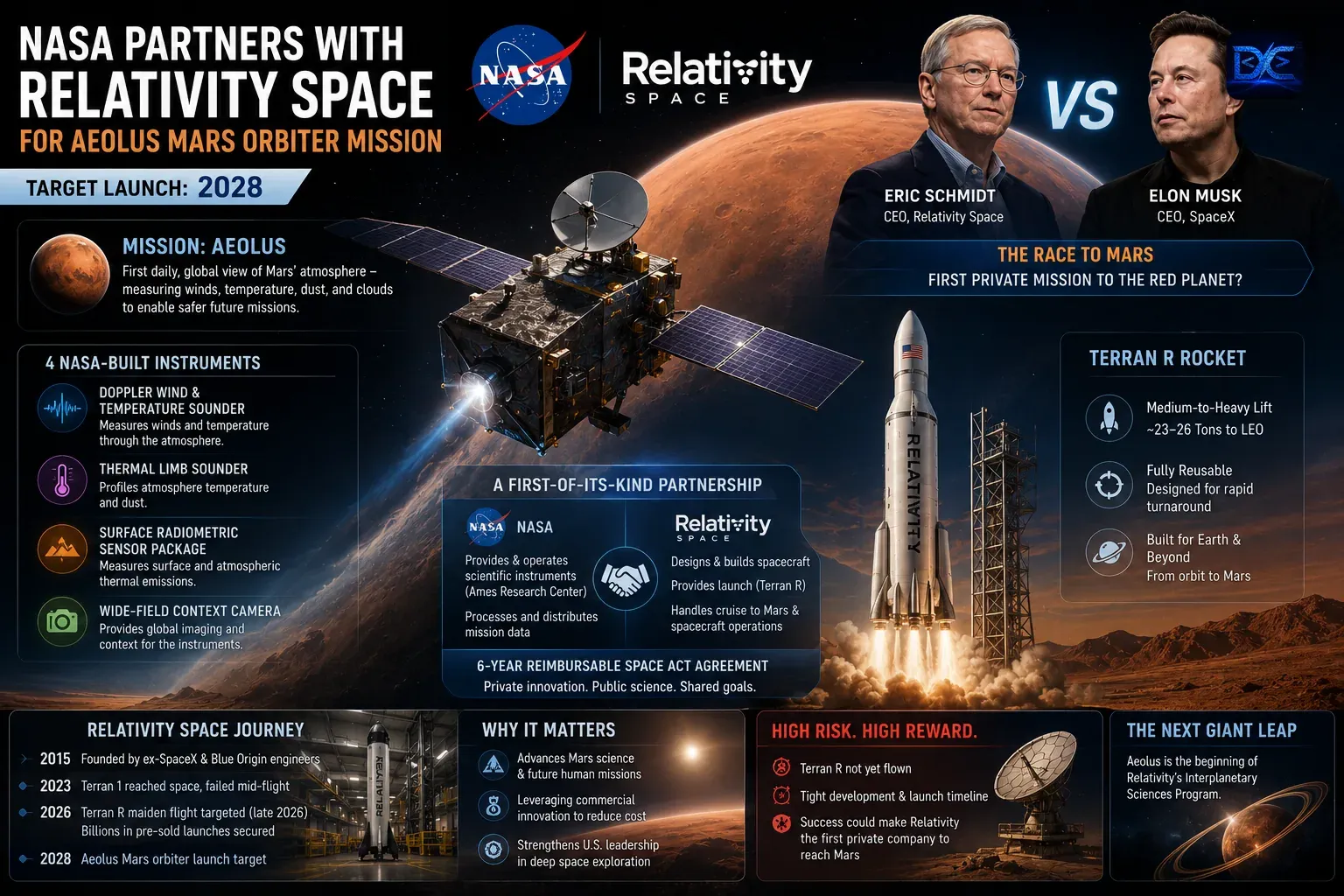
NASA Bets on Relativity Space for a 2028 Mars Orbiter — Setting Up a Race With SpaceX
NASA announced a public-private partnership with Eric Schmidt-led Relativity Space to build and fly the Aeolus Mars orbiter, targeting a 2028 launch on the Terran R rocket. If it works, Relativity could become the first private company to fly a dedicated mission to Mars. Here's the deal, the science, and the risks.
Have a project or an idea?
We don't just write about software — we build it. Tell us what you're working on and we'll get back within 1–2 business days.