Intel Jumps ~9% on Apple Chip Partnership: What's Behind the Surge
Intel shares spiked nearly 9% in pre-market on June 18, 2026 after President Trump said Apple has agreed to partner with Intel to design and make chips in the U.S. Here's what the deal reportedly involves, why it's a big deal for Intel's foundry turnaround, and the caveats worth keeping in mind.
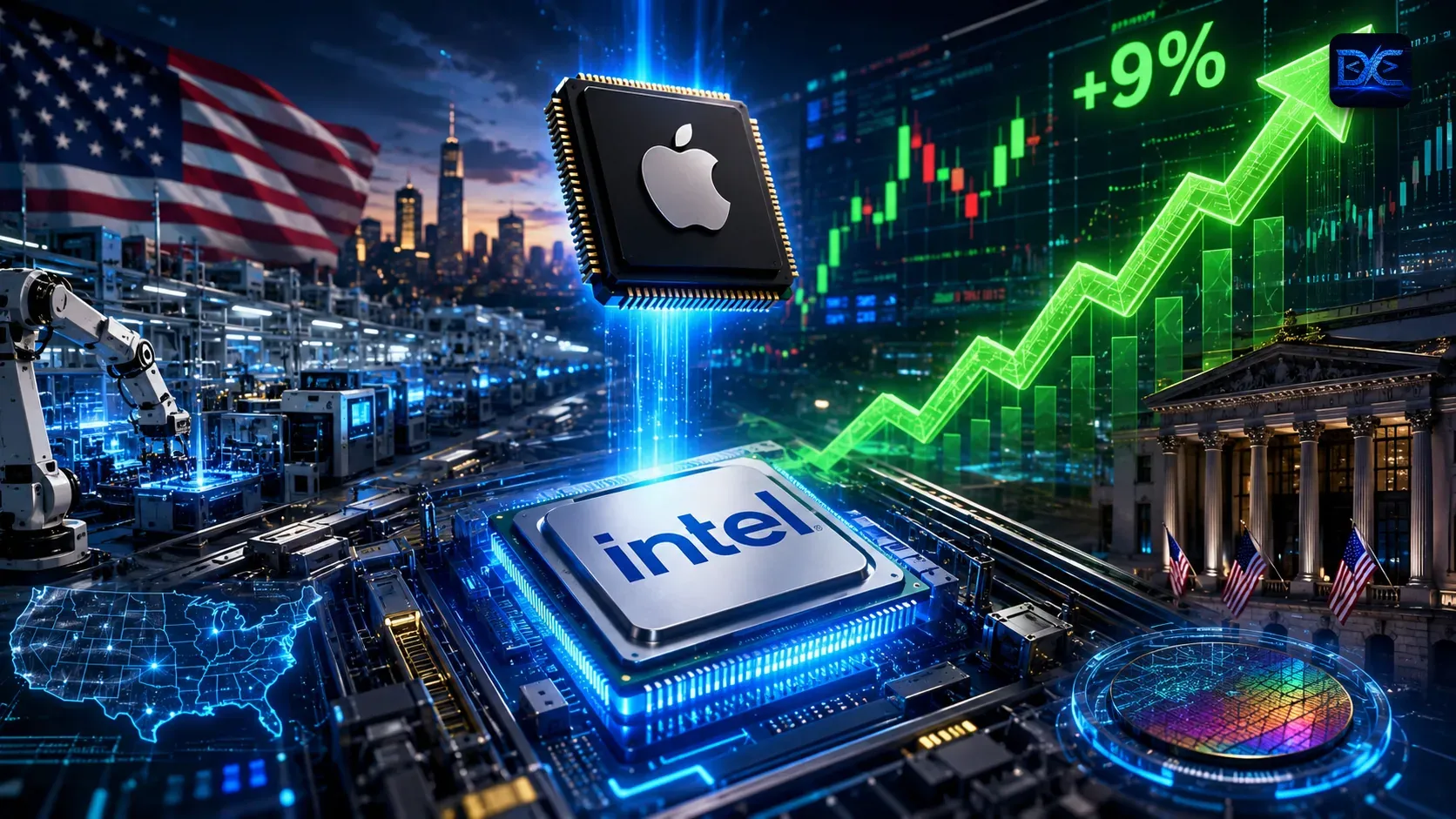
Intel had its best kind of morning. INTC shares surged roughly 9% in pre-market trading on June 18, 2026, after President Donald Trump announced that Apple has agreed to partner with Intel to design and manufacture chips in the United States.
The stock closed at $121.10 the prior day and jumped to around $131–$132 (+8.5–9.2%) before the open. Other chip names — Nvidia, Micron — rode the same wave as the sector caught a bid. For a company that spent 2024–2025 as the poster child for American manufacturing decline, this is a remarkable turn.
Fast-moving story. Details below reflect reporting and statements as of June 18, 2026. Exact terms — which Apple products, chip volumes, timelines — are not fully public. Treat specifics as preliminary until the companies confirm them.
What was announced
| Detail | |
|---|---|
| Trigger | Trump statement that Apple will partner with Intel on U.S.-made chips |
| Market move | INTC +~9% pre-market (≈$121 → ≈$131–132) |
| Focus | U.S.-based design and production of chips |
| Builds on | A preliminary Apple–Intel manufacturing agreement first reported in May 2026 |
| Spillover | Broader chip-sector gains (Nvidia, Micron) |
This isn’t a bolt from the blue. It builds on earlier May 2026 reports of a preliminary agreement for Intel to manufacture some chips for Apple devices — talks that had reportedly been ongoing for over a year.
Why this matters for Intel
The headline isn’t the one-day pop. It’s the validation.
Intel’s biggest strategic bet is its foundry business — manufacturing chips for other companies, not just itself. That business lives or dies on credibility: a leading-edge process customers trust, and marquee names willing to put their silicon on it. Landing Apple — one of the most demanding chip customers on Earth — is exactly the kind of stamp of approval Intel’s foundry pitch has been missing.
Stack it on top of the rest of Intel’s 2026 recovery story:
- 18A process progress. Intel’s next-generation node has been the centerpiece of its comeback, and momentum there underpins the foundry case.
- New foundry customers. Reported orders include AI-chip work for Google.
- Government backing. The White House previously converted roughly $9 billion in CHIPS Act funds into a ~10% government stake in Intel.
- A high-profile customer in Apple now anchoring the validation narrative.
Intel’s stock is up massively from its 2025 lows — by hundreds of percent off the bottom — and each of these data points has added fuel. The Apple news is the most visible yet.
The policy backdrop
The Trump administration has actively pushed to reshore chip manufacturing and reduce reliance on foreign suppliers like TSMC. The President highlighted the Apple–Intel partnership publicly — via Truth Social and statements — framing it as a win for American jobs and tech independence, and has personally lobbied for Intel partnerships with major tech firms.
The market context sharpened the move. The surge landed against a backdrop of a hawkish Federal Reserve outlook and volatility the prior day, which made Intel’s green candle stand out as a clear sector standout.
What it means for the industry
1. The foundry race has a credible third player again. For years the leading-edge logic conversation was effectively TSMC and Samsung. An Apple win — on top of reported Google AI-chip orders — argues Intel Foundry is back in the conversation, not just on paper.
2. Reshoring is becoming a real supply-chain variable. Government equity stakes, CHIPS Act money, and political pressure are reshaping where advanced chips get made. If you build hardware-dependent products, U.S. capacity is shifting from “someday” to “plan for it.”
3. One headline can move the whole sector. Nvidia and Micron rising on Intel’s news is a reminder that semiconductor sentiment trades as a block. Good — and bad — news propagates fast.
Takeaway: The Apple partnership is less about one quarter and more about Intel’s foundry credibility. If it holds up, it reframes Intel from turnaround hopeful to legitimate leading-edge manufacturer.
The honest caveats
- Details are thin. Which Apple products? Which chips? What volumes, on which node, on what timeline? None of that is confirmed publicly yet — it builds on a preliminary agreement.
- Announcements aren’t shipments. Foundry relationships take years to qualify and ramp. A partnership headline and high-volume production are very different milestones.
- Politics is in the mix. With a government stake and an administration eager to claim manufacturing wins, separate the strategic substance from the messaging.
- Pre-market moves can fade. A 9% pre-market pop is sentiment; where the stock settles after official confirmation (or its absence) is the real signal.
Bottom line
Intel’s ~9% surge on the Apple partnership caps one of the most dramatic corporate comebacks in tech. Between 18A progress, reported Google orders, a government stake, and now Apple’s validation, the foundry thesis has real momentum.
The smart read is enthusiasm tempered with patience: this is a credibility boost, and a big one — but the terms are preliminary and the manufacturing milestones are still ahead. Watch for official confirmation from Apple and Intel before treating any specific number as settled.
Sources: President Trump’s public statements (Truth Social), prior May 2026 reporting on an Apple–Intel agreement, and market data for June 17–18, 2026. Deal specifics are preliminary and subject to official confirmation; verify current details before relying on them.
Related articles

China Reclaims the Supercomputer Crown: All-Domestic 'LineShine' Tops the TOP500
China's LineShine system in Shenzhen hit 2.198 Exaflops to top the June 2026 TOP500 — its first number-one since 2017 — built entirely on domestic CPUs, interconnect, and OS. It beats the US El Capitan, but a CPU-only design means it may not lead in AI workloads. Here's the breakdown.
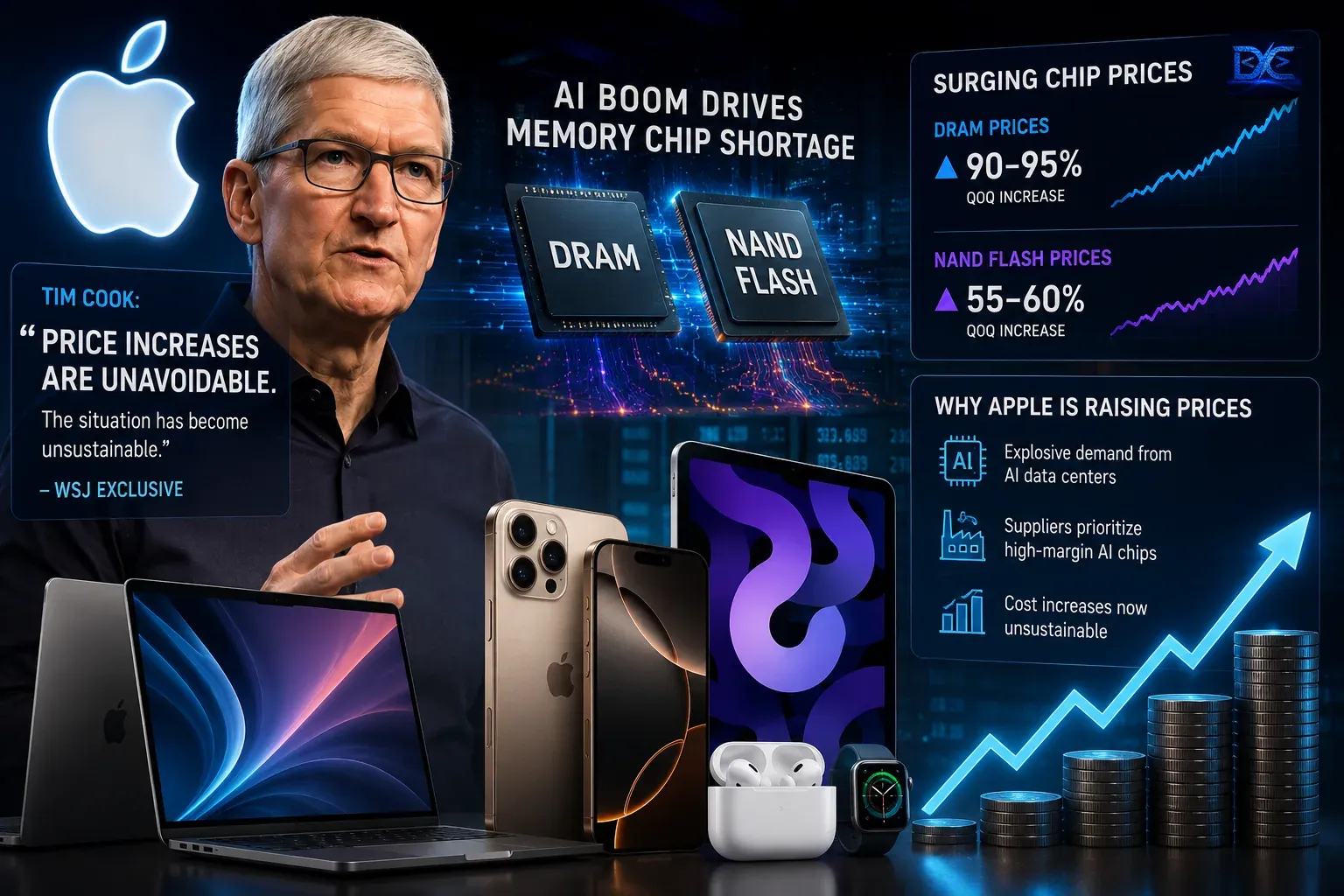
Apple Pulls the Trigger: Macs, iPads and More Get Pricier — iPhone Spared (For Now)
On June 25, 2026, Apple raised prices across Macs, iPads, the HomePod, Apple TV and Vision Pro — citing an AI-driven 'hundred-year flood' in memory and storage chip costs. The iPhone, Apple Watch and AirPods were spared. AAPL fell ~5%. Here's the full price list, why memory hit Macs hardest, and the context behind the move.

Amazon's Zoox Upgrades Its Robotaxi Ahead of Commercial Expansion
On June 24, 2026, Amazon-owned Zoox revealed comfort and design upgrades to its purpose-built, steering-wheel-free robotaxi — redesigned seats, relocated reflectors and two-way audio — ahead of a commercial launch later this year. Its Hayward plant can build up to 100 vehicles a week, scaling toward 10,000 a year, with paid rides pending NHTSA approval.
Have a project or an idea?
We don't just write about software — we build it. Tell us what you're working on and we'll get back within 1–2 business days.