SpaceX Acquires Cursor for $60B: What It Means for AI Coding in 2026
SpaceX has agreed to buy Anysphere — the maker of AI code editor Cursor — for $60 billion in an all-stock deal. Here's the full breakdown: the timeline, the strategy behind pairing Cursor with SpaceX's Colossus supercompute, what it means for developers, and the honest caveats on a fast-moving story.
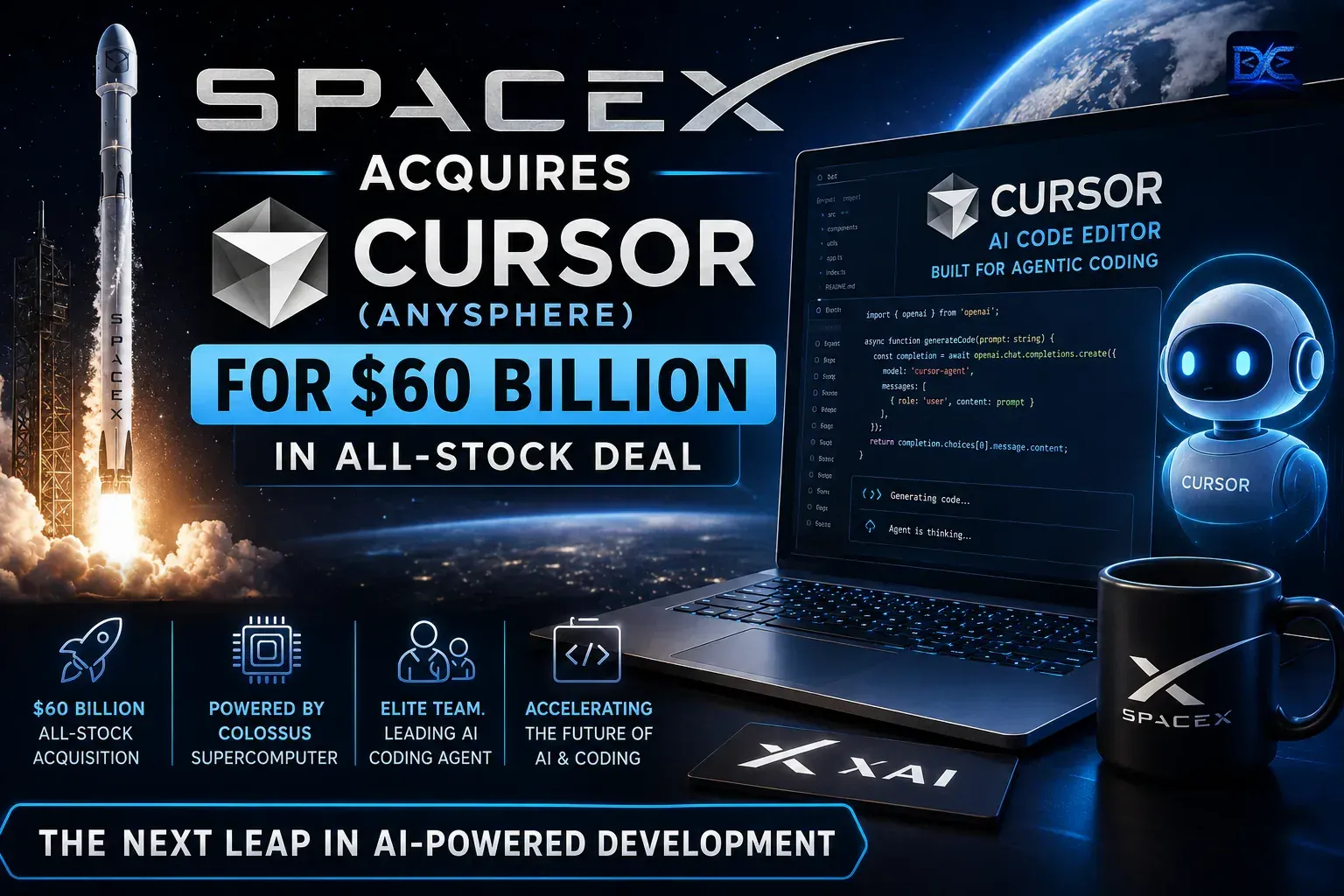
The AI coding wars just got a new heavyweight. SpaceX has agreed to acquire Anysphere — the company behind the wildly popular AI code editor Cursor — in a $60 billion all-stock deal, announced June 16, 2026, shortly after SpaceX’s blockbuster IPO. It is one of the largest acquisitions ever in developer tooling, and it folds a frontier coding agent into Elon Musk’s compute-and-AI empire.
If you write code for a living, this isn’t just finance-page noise. It reshapes who owns the tools you may be using every day, and it signals where agentic coding is heading. Here’s the full breakdown — and the parts worth treating with caution.
Fast-moving story. Details below reflect reporting as of June 16–17, 2026. The deal is subject to regulatory approval and expected to close in Q3 2026 — terms and status may shift. Verify the latest before acting on any of it.
The deal at a glance
| Detail | |
|---|---|
| Acquirer | SpaceX (integrating under its broader AI efforts with xAI) |
| Target | Anysphere Inc. — maker of Cursor |
| Price | $60 billion, all-stock |
| Announced | June 16, 2026 (option exercised) |
| Expected close | Q3 2026, pending regulatory approval |
| Outcome | Cursor becomes a wholly owned subsidiary |
The structure is the clever part. Back in April 2026, SpaceX and Cursor struck a partnership that gave SpaceX an option: either acquire Cursor for $60B later in 2026, or pay $10B for collaborative development work, with a breakup-fee structure. On June 16, SpaceX exercised the acquisition option — using its freshly minted, post-IPO stock as currency rather than cash.
Why Cursor, and why now
Cursor isn’t a side project. Founded in 2022 by four MIT graduates, it grew from an AI-native code editor into a full agentic coding tool — one that plans, edits across files, runs commands, and iterates, rather than just autocompleting lines. By 2026 it had:
- Hundreds of thousands of paying users, including engineers at top AI labs.
- Estimated annual revenue in the $2–3 billion range.
- A valuation that rocketed from ~$29B in late 2025 to $50B+ talks by April 2026.
- Deep enterprise adoption across Fortune 500 engineering teams.
In other words, SpaceX didn’t just buy a product — it bought distribution to expert developers, an elite engineering team, and a foothold in the most valuable emerging category in software: autonomous coding.
The strategic logic: product meets compute
The thesis behind the price tag is vertical integration of AI. Musk’s companies already own enormous compute — SpaceX’s Colossus supercluster reportedly runs millions of H100-equivalent GPUs. Cursor brings the opposite end of the stack: a polished product with real users and real revenue.
   Cursor                         SpaceX / xAI
   ───────                        ────────────
   • agentic code editor    ─┐    • Colossus supercompute
   • expert-dev distribution │──▶ • frontier model training (Grok)
   • enterprise revenue      │    • capital + post-IPO stock
   • top engineering talent ─┘    • cross-company integration
The play: train new frontier models on SpaceX-scale compute, ship them inside Cursor and Grok, and use Cursor’s user base as both a distribution channel and a feedback flywheel. It’s an attempt to close the gap with Anthropic, OpenAI, and Google in enterprise AI tools and autonomous agents — by owning product, talent, and compute in one stack.
What it means for developers
1. Your tools now sit inside a bigger AI war. Cursor’s roadmap will increasingly be shaped by frontier-model strategy and Grok integration, not just editor UX. Expect faster model upgrades — and tighter coupling to one ecosystem.
2. Consolidation cuts both ways. More compute behind Cursor could mean genuinely better agentic capabilities. But concentration of dev tooling under a few mega-players is exactly the dynamic that makes portability matter. Keep your workflow tool-agnostic where you can — standards like the Model Context Protocol (MCP) and open formats are your insurance against lock-in.
3. The proprietary-vs-open gap widens. Deals like this raise the ceiling for closed, compute-heavy tools. That tends to energize the open-source side (local models, open agents) as a counterweight. Watching both ends of that spectrum is now part of staying current.
4. Agentic coding is the center, not the edge. A $60B price on an AI editor is the market saying agentic coding is core infrastructure, not a novelty. If you haven’t folded an agent into your daily loop yet, this is the signal to start experimenting — deliberately, with review gates, not blindly.
Takeaway: Lean into agentic tools for leverage, but architect your workflow so no single vendor owns your productivity. Capability is the upside; portability is the hedge.
The honest caveats
This is a fast-moving, partly-unverified story. Hold the excitement alongside the skepticism:
- It isn’t closed yet. Regulatory approval is pending and the deal is expected to close in Q3 2026. Large all-stock tech deals can change shape — or stall.
- The valuation draws fire. Reaction has been mixed: praise from some investors, real skepticism about a $60B price and stock dilution from others.
- Integration risk is real. Pairing a fast-moving startup with a giant organization is historically where value gets created or destroyed. Culture and roadmap clashes are the norm, not the exception.
- Some figures are estimates. Revenue ranges and founder net-worth numbers come from secondary reporting, not audited filings. Treat them as directional.
Bottom line
The SpaceX–Cursor deal is a marker of the moment: AI coding tools are now strategic infrastructure, valued like the platforms they’re becoming, and being absorbed into the same compute-and-model empires racing to build frontier AI.
For developers, the practical move is unchanged by the headline: use the best agentic tools for leverage, stay fluent in more than one, and keep your workflow portable. Capability is moving fast and consolidating faster — the engineers who benefit most will be the ones who ride the tools without being captured by them.
Sources: CNBC, Forbes, Reuters, and SpaceX’s official announcements (June 16–17, 2026). Deal terms and regulatory status are subject to change; verify current details before relying on them.
Related articles
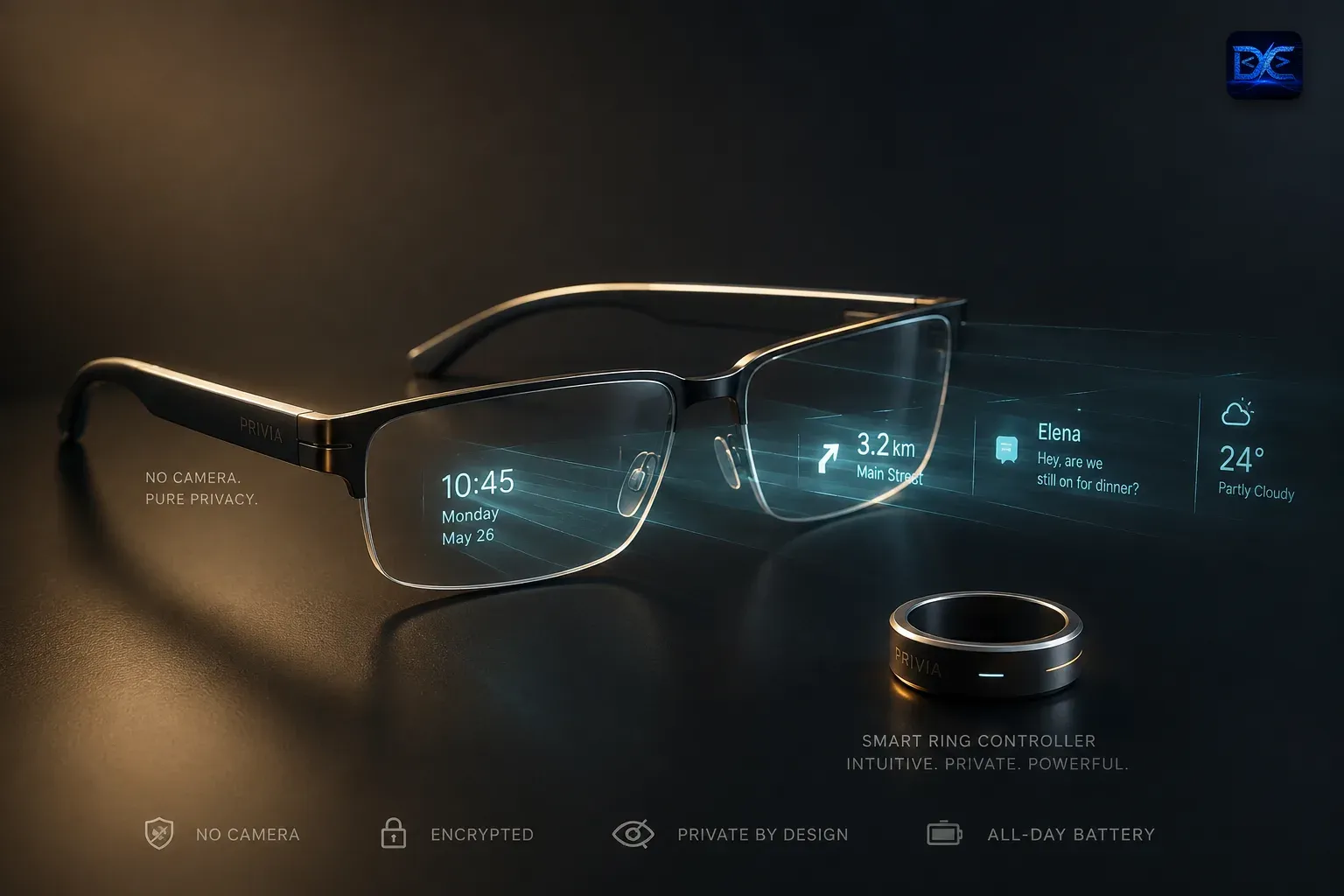
Even Realities Hits $1B Betting Against the Camera in Smart Glasses
Even Realities, a Shenzhen startup founded by ex-Apple engineers, raised $150M in a pre-Series B led by Meituan and Tencent on July 6, 2026, reaching a $1 billion valuation. Its pitch: camera-free, display-first smart glasses that take on Meta on privacy. Here's the round, the product, and the strategy.
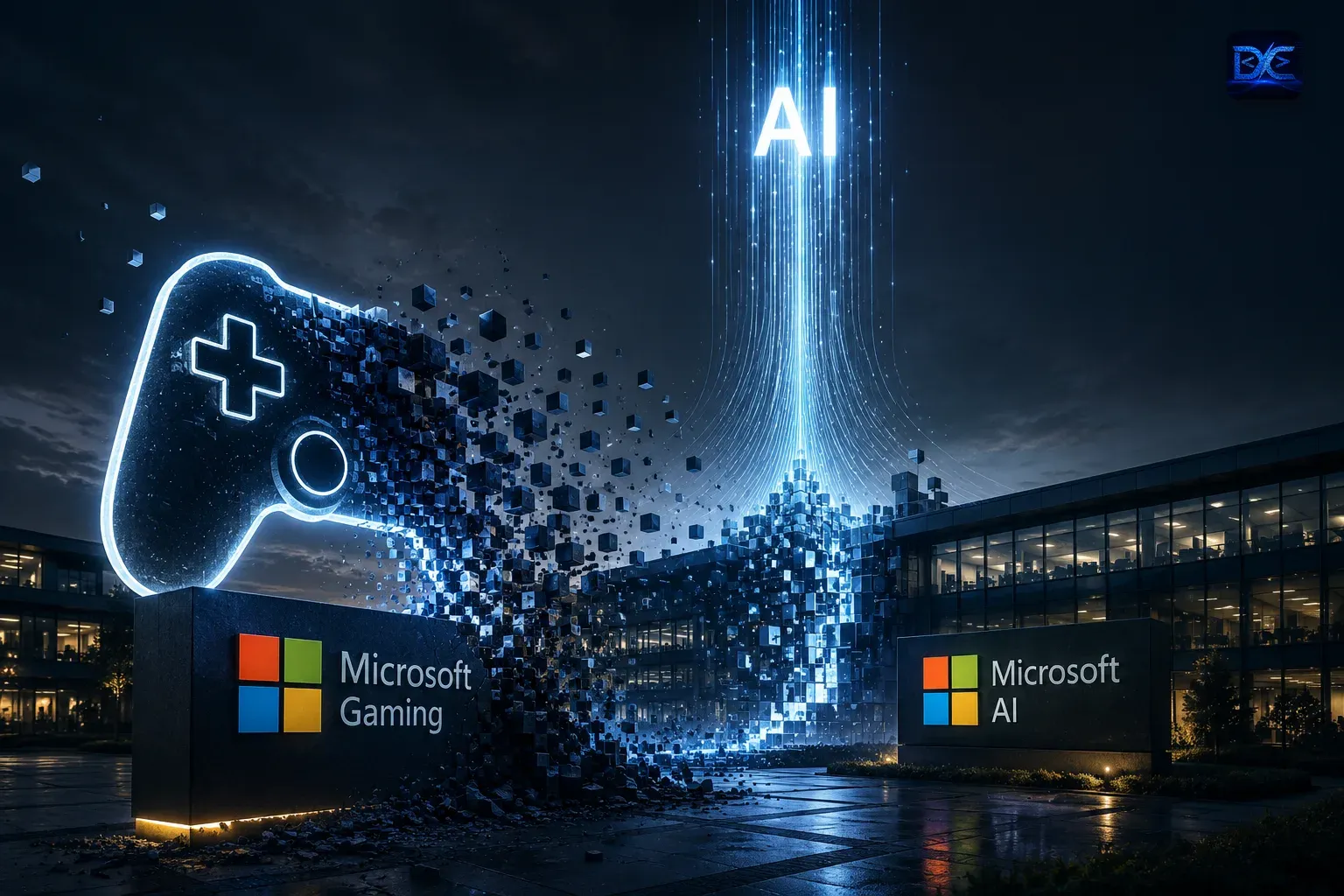
Microsoft Cuts 4,800 Jobs and Guts Xbox in a 'Painful Reset' for AI
Microsoft is cutting roughly 4,800 jobs (about 2.1% of its workforce) on July 6, 2026, with Xbox facing up to 3,200 cuts over the next year and four studios — Ninja Theory, Undead Labs, Compulsion Games and Double Fine — divested. Here's what happened, who's affected, and why it's framed as an AI-spending reset.
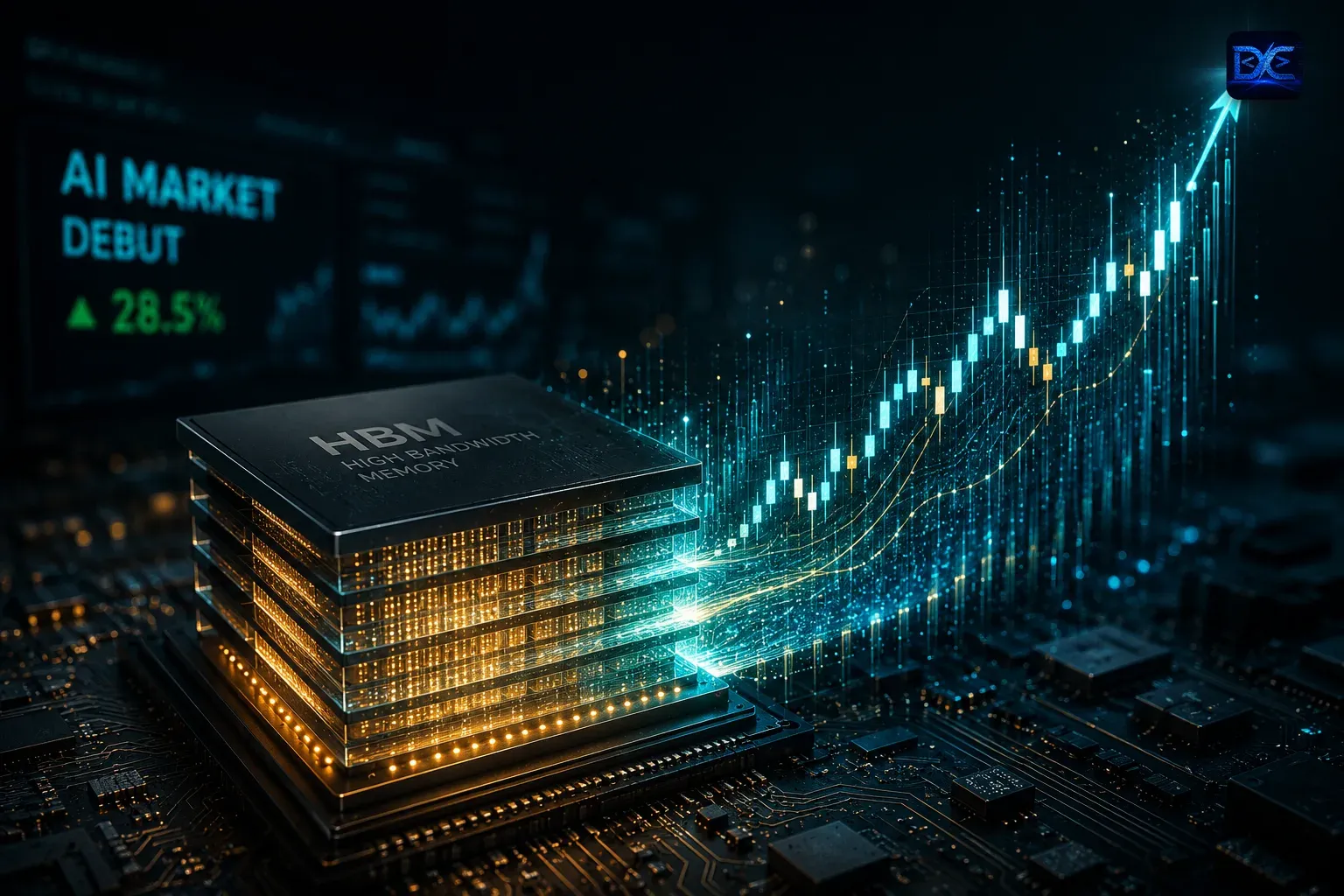
SK Hynix's ~$29B Nasdaq Debut: Cashing In on the AI Memory Boom
SK Hynix is launching one of the largest-ever foreign listings on Nasdaq — up to ~$29 billion via ADRs (ticker SKHY), with a debut targeted for July 10, 2026. The world's top HBM supplier is tapping US AI investors to fund memory-capacity expansion. Here's the offering, the AI backdrop, and where the money goes.
Have a project or an idea?
We don't just write about software — we build it. Tell us what you're working on and we'll get back within 1–2 business days.