China Reclaims the Supercomputer Crown: All-Domestic 'LineShine' Tops the TOP500
China's LineShine system in Shenzhen hit 2.198 Exaflops to top the June 2026 TOP500 — its first number-one since 2017 — built entirely on domestic CPUs, interconnect, and OS. It beats the US El Capitan, but a CPU-only design means it may not lead in AI workloads. Here's the breakdown.

China is back on top of supercomputing. In the June 2026 TOP500 list, a system named LineShine at the National Supercomputing Center in Shenzhen clocked 2.198 Exaflops on the High Performance Linpack benchmark — the first machine ever to break 2 EFlops — and reclaimed the number-one spot for the first time since 2017. The twist: it’s built on a fully domestic stack — Chinese CPUs, interconnect, and operating system — and notably uses no GPUs.
Fast-moving story. Figures below reflect the June 2026 TOP500 edition and official system disclosures. Rankings and specs change between editions — treat them as point-in-time.
At a glance
| Detail | |
|---|---|
| System | LineShine (a.k.a. Ling Chen / Ling Shen) |
| Location | National Supercomputing Center, Shenzhen |
| HPL performance | 2.198 EFlops — first system past 2 EFlops |
| CPU | LineShine-LX2, ARMv9, 304 cores each, 1.55 GHz |
| Scale | 45,360 CPUs = ~13.79 million cores |
| Interconnect / OS | LinqQi fabric · Kylin OS (Linux) |
| Power | 42.22 MW at 52.1 GFlops/W |
| Beats | US El Capitan (1.809 EFlops, AMD MI300A) |
What LineShine actually is
LineShine isn’t just fast — it’s all-Chinese, end to end. The compute comes from LineShine-LX2 processors built on the ARMv9 architecture, each packing 304 cores at 1.55 GHz with ARM SVE and Scalable Matrix Extensions (SME). Across 45,360 processors, that’s roughly 13.79 million cores.
Tying it together is a homegrown LinqQi interconnect (≈1.6 Tbit/s per CPU) and the domestic Kylin OS, a Linux derivative. It draws 42.22 megawatts and lands at 52.1 GFlops per watt on efficiency.
The headline number: 2.198 Exaflops on HPL — over 2 quintillion floating-point operations per second, and the first time any system has crossed the 2-EFlops line.
How it beat El Capitan
The previous champion, the US El Capitan at Lawrence Livermore (which the US uses for its nuclear-stockpile work), posts 1.809 EFlops on HPL using AMD MI300A accelerators. LineShine edges it by nearly 400 PFlops on the benchmark — even though El Capitan has a higher theoretical peak (~2.821 EFlops). In other words, China’s machine converts more of its raw potential into measured Linpack performance here.
It’s also a comeback: the last Chinese system to hold #1 was Sunway TaihuLight in 2017. China then stopped submitting systems to the TOP500 in 2023 amid US chip-export controls — so this isn’t just a ranking, it’s a statement that the country can build a world-leading machine without Western silicon.
The catch: it’s not built for AI
Topping the TOP500 measures 64-bit (FP64) Linpack throughput — classic scientific-computing horsepower. Modern AI training lives on lower-precision math (FP16/FP8), where GPUs shine.
That’s where LineShine’s CPU-only design shows its limits: on the HPL-MxP mixed-precision benchmark it ranks only 4th at 7.92 EFlops, because CPU-only systems get far less speedup from reduced precision than GPU-accelerated platforms. So while LineShine is the world’s fastest at traditional HPC, it likely won’t lead the AI race, where US GPU clusters still dominate.
Why it matters
1. Self-sufficiency is the real story. A #1 supercomputer with a 100% domestic CPU, interconnect, and OS is a direct answer to export controls — proof that China’s chip ecosystem can produce frontier-class hardware on its own terms.
2. HPC leadership ≠ AI leadership. The result is a useful reminder that “world’s fastest” depends on the benchmark. For nuclear simulation, climate, materials, and physics, FP64 is king — but the AI frontier is a different contest, still tilted toward GPUs.
3. The benchmark game is geopolitical. China returning to the list — loudly, with domestic parts — reframes the TOP500 as much a statement of technological independence as a performance chart.
Bottom line
LineShine’s 2.198 EFlops makes China the fastest in the world on the TOP500 for the first time since 2017 — and it did it with an entirely domestic stack, no GPUs required. It’s a genuine engineering and geopolitical milestone. But the CPU-only architecture that wins at FP64 Linpack is not optimized for AI, where the US still holds the edge. Two different races — and right now, each side leads one.
Sources: June 2026 TOP500 list and system disclosures, reporting from heise online, Reuters, Business Standard, SCMP, and technology.org. Rankings and specifications are point-in-time and may change in future TOP500 editions.
Related articles
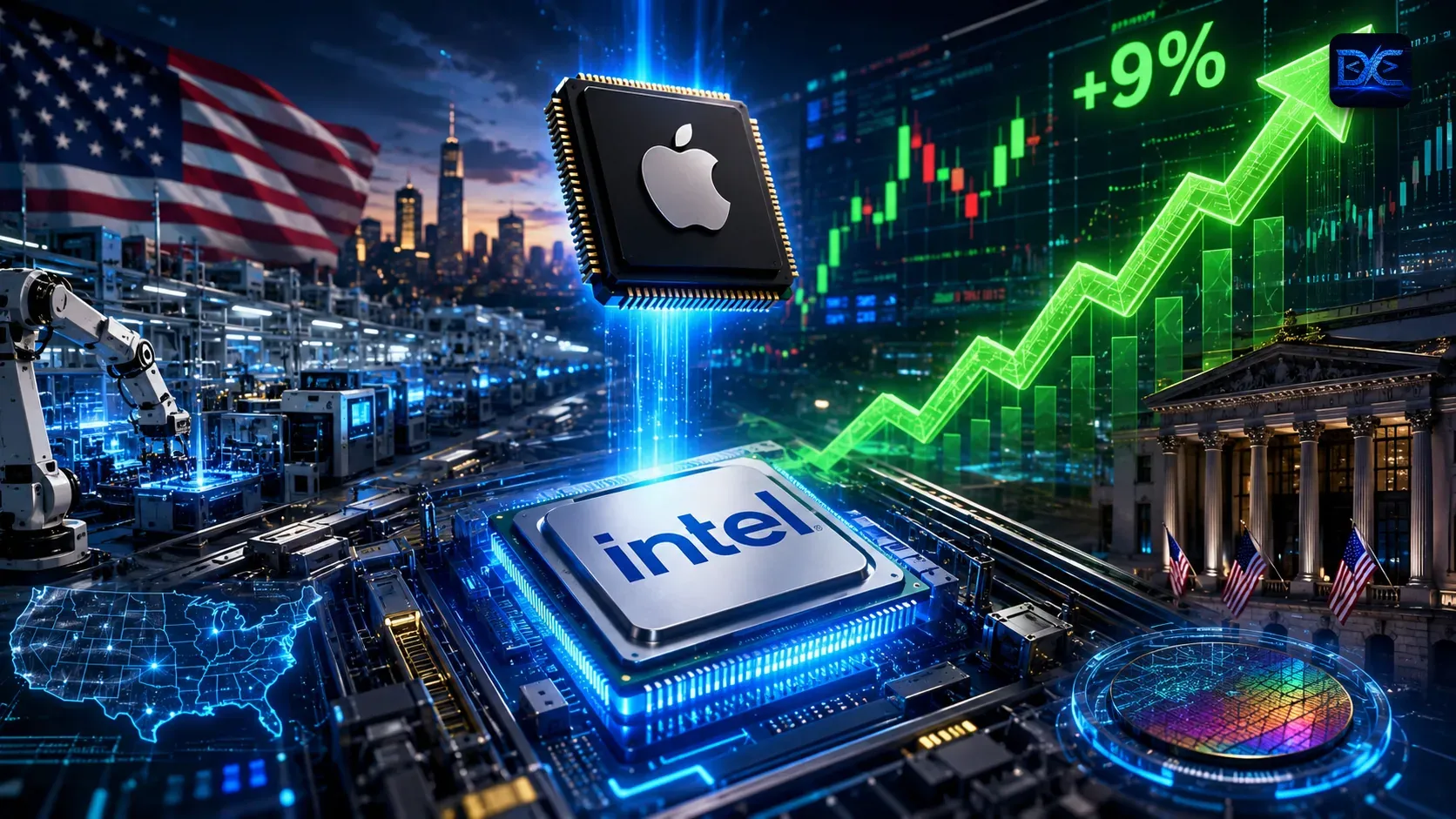
Intel Jumps ~9% on Apple Chip Partnership: What's Behind the Surge
Intel shares spiked nearly 9% in pre-market on June 18, 2026 after President Trump said Apple has agreed to partner with Intel to design and make chips in the U.S. Here's what the deal reportedly involves, why it's a big deal for Intel's foundry turnaround, and the caveats worth keeping in mind.

Amazon's Zoox Upgrades Its Robotaxi Ahead of Commercial Expansion
On June 24, 2026, Amazon-owned Zoox revealed comfort and design upgrades to its purpose-built, steering-wheel-free robotaxi — redesigned seats, relocated reflectors and two-way audio — ahead of a commercial launch later this year. Its Hayward plant can build up to 100 vehicles a week, scaling toward 10,000 a year, with paid rides pending NHTSA approval.
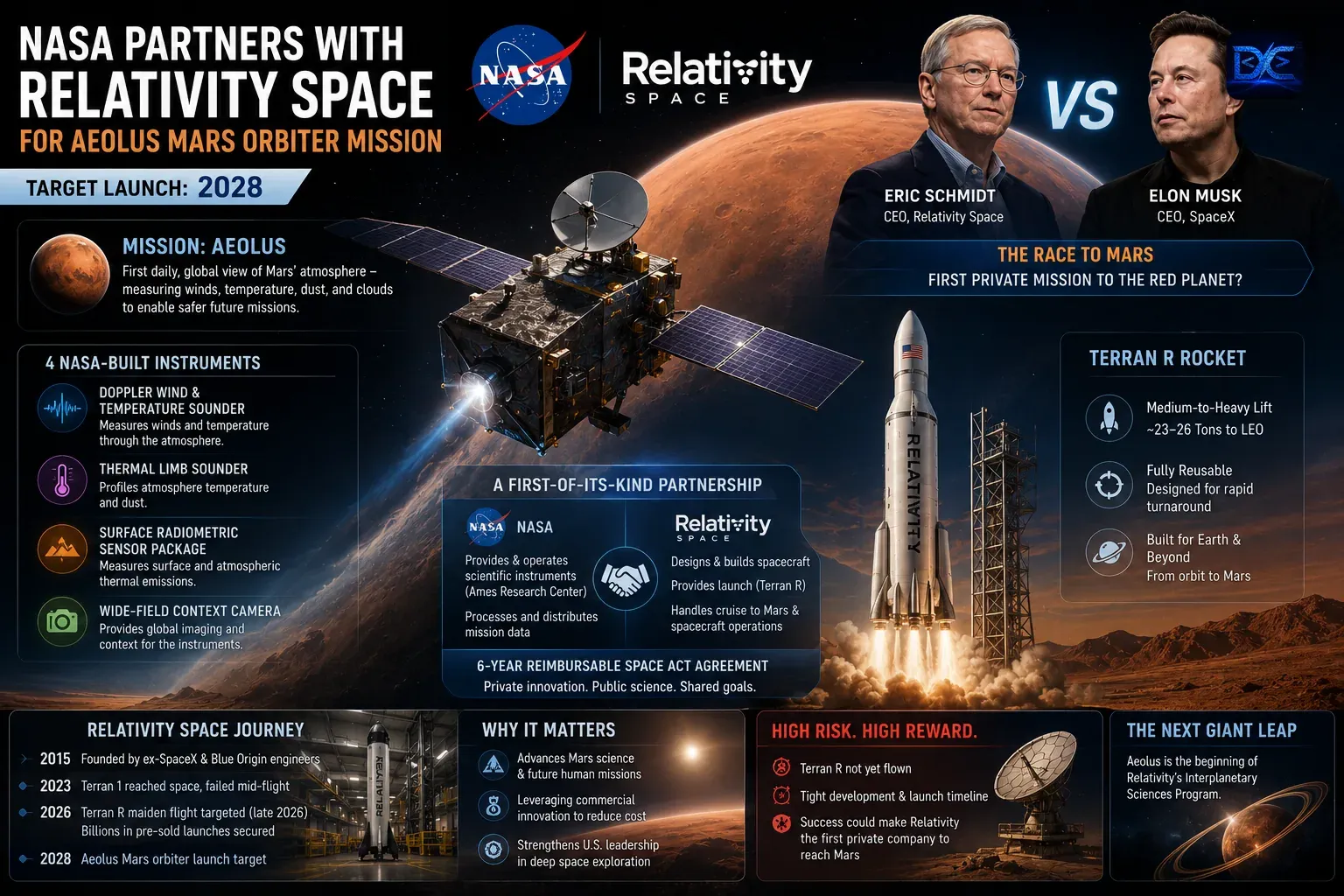
NASA Bets on Relativity Space for a 2028 Mars Orbiter — Setting Up a Race With SpaceX
NASA announced a public-private partnership with Eric Schmidt-led Relativity Space to build and fly the Aeolus Mars orbiter, targeting a 2028 launch on the Terran R rocket. If it works, Relativity could become the first private company to fly a dedicated mission to Mars. Here's the deal, the science, and the risks.
Have a project or an idea?
We don't just write about software — we build it. Tell us what you're working on and we'll get back within 1–2 business days.