Meta Goes Solo on Smart Glasses: $299 'Meta Glasses' Undercut Ray-Ban
Meta launched its first self-branded smart glasses on June 23, 2026, starting at $299 — cheaper than its Ray-Ban models. The Meta Glasses pack a 12MP camera, open-ear speakers, and built-in Meta AI, with multiple models planned for 2026. Here's the lineup, the specs, and why Meta is dropping the price.
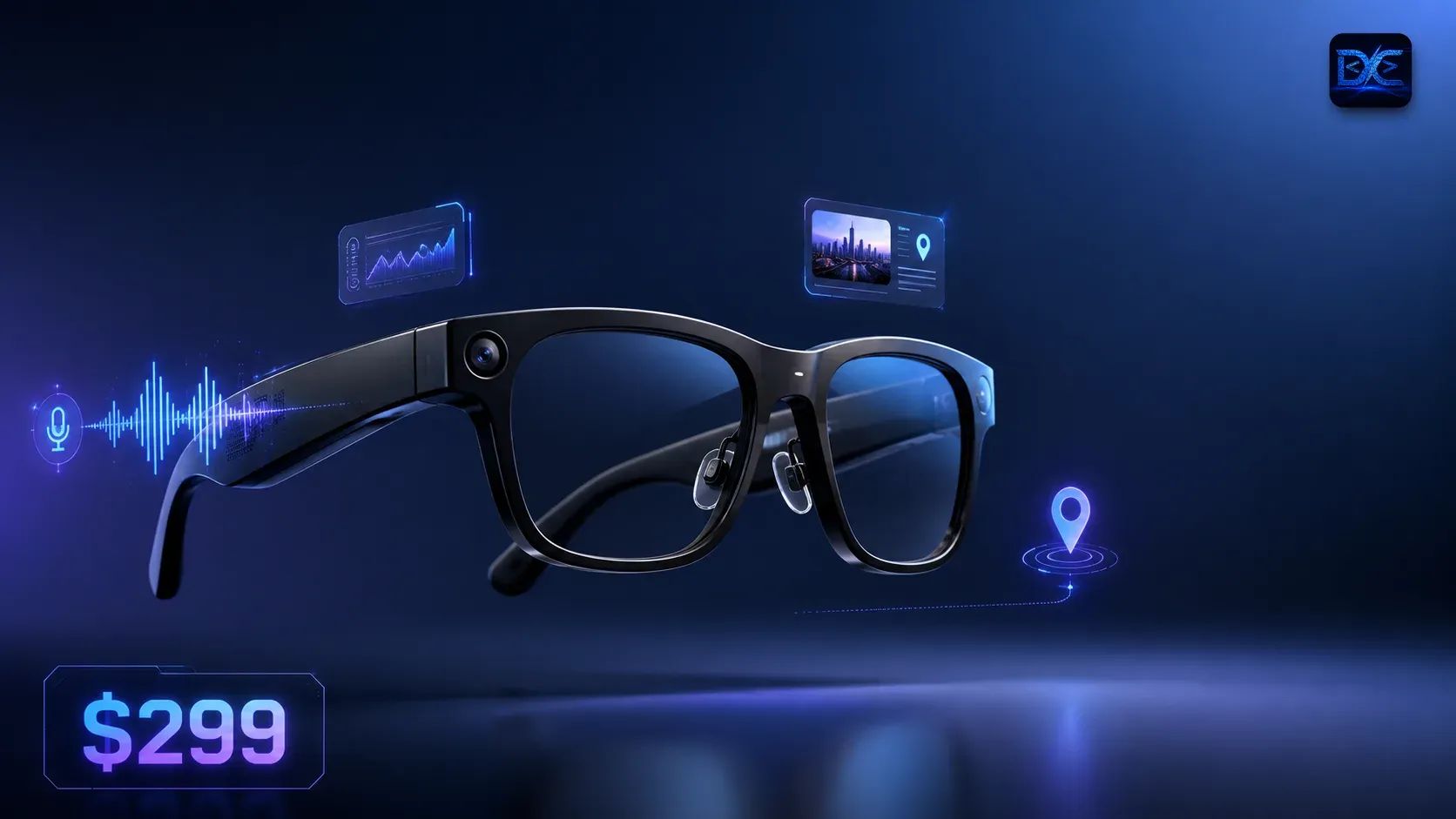
Meta just stepped out from behind the Ray-Ban label. On June 23, 2026, the company debuted its first self-branded smart glasses — simply called Meta Glasses — starting at $299, undercutting its own Ray-Ban Meta lineup. The pitch: an AI-powered, camera-and-audio wearable for the price of a mid-range pair of headphones, with multiple models planned through 2026.
Fast-moving story. Pricing, model names, and availability below reflect the June 23, 2026 launch and can change by region. Check Meta’s official store for the current lineup and price in your country.
At a glance
| Detail | |
|---|---|
| Launch date | June 23, 2026 (multiple countries) |
| Starting price | $299 — Meta’s first own-brand glasses |
| Models | Adventurer & Fury ($299); a Kylie Jenner–designed model at a premium (reported ~$399) |
| Camera / video | 12MP camera, 3K video |
| Audio | Open-ear speakers (no display screen) |
| Battery | 8+ hours; charging case adds up to ~40 hours |
| Brain | Meta AI built in |
What’s new
The headline is the brand and the price. Until now, Meta’s glasses rode on Ray-Ban and Oakley frames (via EssilorLuxottica). These are the first to carry Meta’s own name — and at $299, they land below the newest Ray-Ban Meta models (which start around $379).
The lineup launches with a few looks:
- Meta Adventurer — rectangular frame, standard and large sizes.
- Meta Fury — a boxier, bolder frame.
- A Kylie Jenner–designed model — a slim, oval style (reported around $399), a clear nod to the fashion-first crowd.
Crucially, this is the display-free line — no in-lens screen (that’s the pricier Ray-Ban Display tier). Instead you get a 12MP camera, 3K video capture, and open-ear speakers for calls, audio, and Meta AI.
The AI is the point
These aren’t just camera glasses — the draw is Meta AI on your face. It can:
- Answer questions hands-free — from sports scores to local restaurant picks.
- See what you see — visual understanding of whatever the camera is pointed at.
- Help with daily tasks — lightweight reminders and assistance.
Meta is also rolling out turn-by-turn pedestrian navigation (walking directions in your ear) and adding 14 new languages, including Japanese, Mandarin Chinese, Hindi, and Korean — a clear signal that the glasses are being aimed at a global audience, not just the US.
Battery is a practical win: over 8 hours on a charge, with the case topping up ~40 more hours — enough to make all-day wear realistic.
Why Meta is dropping the price
1. Volume over margin. Cheaper hardware is how you get AI glasses onto millions of faces. Meta isn’t chasing accessory profits — it wants a mass install base for Meta AI and a head start on the next computing interface.
2. Owning the brand (and the roadmap). Moving beyond Ray-Ban/Oakley lets Meta control design, pricing, and release cadence directly — and it’s signaling an aggressive 2026 with multiple models rather than one annual refresh.
3. Defending a lead before Apple shows up. Meta and EssilorLuxottica already control an estimated ~80% of the smart-glasses market (per Counterpoint Research). Launching a cheaper, own-brand line now is a way to widen that lead before Apple’s expected entry into the category.
Why it matters
Smart glasses are becoming the AI form factor. Phones aren’t going anywhere, but always-available, camera-equipped, voice-first AI fits a wearable better than a slab in your pocket. A $299 entry point makes that future a lot more reachable.
Price is now a strategy, not an afterthought. By undercutting its own premium line, Meta is treating glasses like a platform play — subsidize the hardware, win the ecosystem. That’s a familiar move, and it tends to reshape whole categories.
The global push is deliberate. Multi-language support and walking navigation aren’t gimmicks — they’re the features that turn glasses from a US gadget into a daily tool worldwide.
Bottom line
Meta’s $299 self-branded Meta Glasses are the clearest sign yet that the company sees AI wearables as the next platform — and it’s willing to compete on price to get there first. With a 12MP camera, open-ear audio, all-day battery, and Meta AI baked in (plus more models coming in 2026), the bar for “good enough” smart glasses just dropped — and the race with Apple is officially on.
For the latest models, regional pricing, and availability, check Meta’s official store.
Sources: launch coverage for June 23, 2026 (TechCrunch, CNBC, CNN, MacRumors, Yahoo Finance) and market data from Counterpoint Research. Pricing and availability vary by region and may change — verify on Meta’s official store.
Related articles

Meta Bets on Prediction Markets ('Arena'); Qualcomm Buys Modular for ~$4B
Two AI-era power moves landed in late June 2026: Mark Zuckerberg directed Meta to build a prediction markets app codenamed 'Arena,' aiming at billions of users and rivals like Polymarket and Kalshi. Separately, Qualcomm is acquiring AI software startup Modular — maker of the Mojo language and MAX engine — in an all-stock deal worth nearly $4 billion to challenge Nvidia's CUDA moat.

'Months, Not Years': Five Eyes Warns AI Is About to Supercharge Cyberattacks
On June 23, 2026, the Five Eyes cyber agencies (CISA, NSA, NCSC, ASD, CSE, GCSB) issued a joint warning that frontier AI models are advancing fast enough to outpace defenses in 'months, not years' — lowering the bar for attackers and speeding up vulnerability discovery. Here's what they said, the Anthropic-Claude espionage case behind the alarm, and the wider AI-security crackdown.

Micron Crushes It: Record $41.5B Quarter Reignites the AI Chip Trade
Micron reported blockbuster fiscal Q3 2026 results on June 24, 2026 — record revenue of $41.46 billion (up ~346% YoY) and $25.11 non-GAAP EPS, both crushing estimates — then guided to a stunning ~$50 billion next quarter. Shares jumped ~15%, SK Hynix and Samsung rallied, and the whole HBM/AI memory trade got its confidence back. Here's the breakdown.
Have a project or an idea?
We don't just write about software — we build it. Tell us what you're working on and we'll get back within 1–2 business days.